Health & Wellness
Menopause Support: Symptoms, Care and Supplement Questions
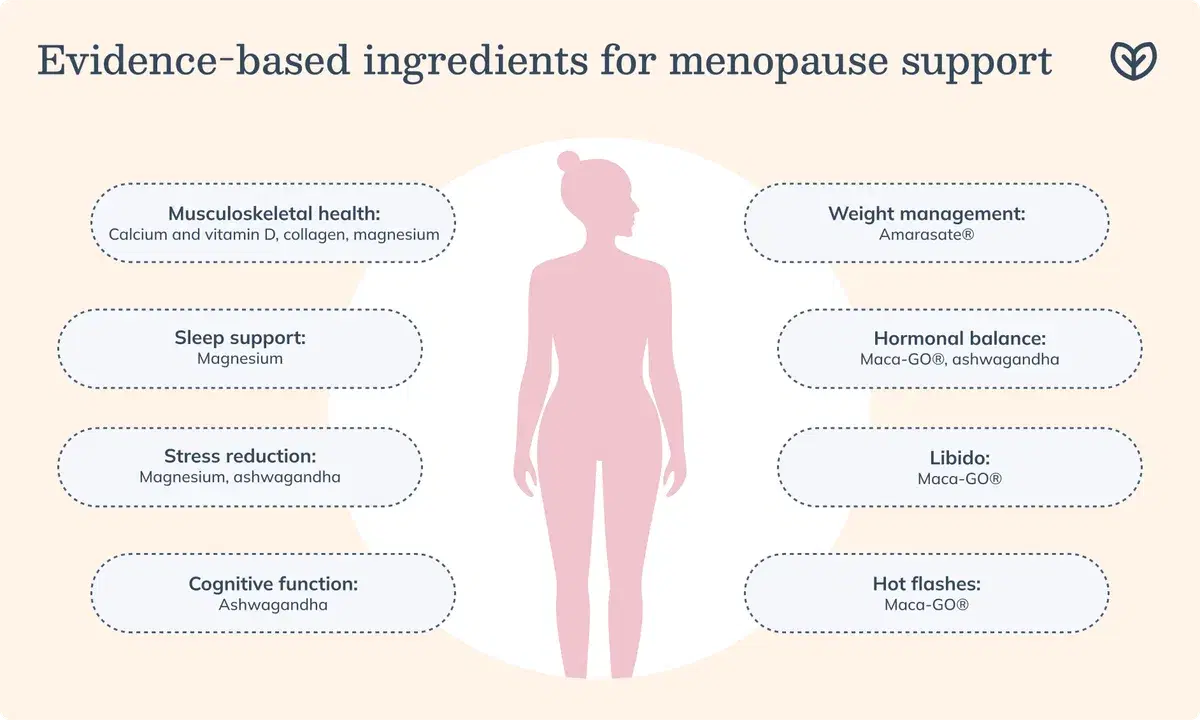
For your understanding.
This article is for general education and is not medical advice. It does not replace an individual assessment or guidance from a qualified healthcare professional.
Menopause support should start with the symptoms affecting your life and the options that have evidence for those symptoms. Sleep disruption, hot flashes, vaginal discomfort, mood concerns and changes in body composition do not all need the same response. A supplement stack is not a substitute for an individual assessment or a discussion of established treatments.
What is menopause, and what is perimenopause?
Menopause is generally recognized after 12 consecutive months without a period. Perimenopause is the transition around that time, when cycles and symptoms can change. Medication, surgery and other conditions can affect how the transition is assessed, so a clinician should interpret your situation rather than rely on a single symptom or home test.
The FDA’s menopause guide describes common concerns, including hot flashes, night sweats and vaginal changes. Symptoms that interfere with daily activities or worsen deserve attention; you do not have to wait until they become severe to discuss them.
Make the appointment about your priorities
A brief symptom record can make the conversation more useful. Note which symptoms are most disruptive, when they occur, menstrual changes, current medicines and the supplements you already take. Be specific about sleep, discomfort with sex, mood and what you want to be able to do more comfortably.
Some concerns may need evaluation beyond menopause. The ACOG guidance on abnormal bleeding emphasizes assessment of bleeding changes, especially any bleeding after menopause. Do not assume spotting is harmless or try to manage it with supplements.
Which treatment options should be discussed?
Hormonal and nonhormonal treatments are available. The choice depends on the symptom, medical history, preferences and product-specific benefits and risks. Treatment for hot flashes may differ from treatment for vaginal dryness or a separate sleep disorder.
The RCOG patient guide outlines symptom-focused options and shared decision-making. For a U.S. treatment decision, discuss current FDA-approved options and their labels with your clinician. A term such as “bioidentical” does not by itself establish that a compounded preparation is safer or more effective.
Where do everyday habits fit?
Movement, an eating pattern that meets your needs, and attention to sleep can support overall health during this transition. They do not need to be framed as a cure for every symptom. Discuss suitable resistance and weight-bearing activity, especially if joint pain, injury or bone-health concerns affect what you can do.
Body composition is also more informative than treating every scale change as a personal failure. The healthy-aging guide and lean-mass article provide questions for a broader discussion of strength and function.
Should everyone take menopause supplements?
No single combination is appropriate for everyone. A nutrient supplement may address a particular dietary need, but that is different from demonstrating treatment of hot flashes or “hormone balance.” Product composition, existing medicines and medical conditions can change the risk-benefit discussion.
NCCIH notes limited evidence for many marketed natural products and the possibility of side effects and interactions. Bring the complete labels to a clinician or pharmacist rather than selecting several ingredients based on overlapping promises. High-dose vitamins, botanicals and hormone-related products deserve the same specific questions as any other intervention.
Questions for a useful next step
- Which symptoms are likely related to the transition, and what else needs evaluation?
- What hormonal or nonhormonal options fit my history and preferences?
- What outcome would tell us the approach is helping, and when should we reassess?
- Is there an identified reason for each supplement I am considering?
If you have encountered peptide-based menopause claims, the separate evidence and safety article addresses those questions. Good support connects your concerns to a specific plan, rather than treating menopause as a reason to buy a universal stack.
Your next step
Talk through your menopause-care questions.
Ask the Allura team about current consultation options and which professional can best address your concerns and goals.
Provider availability and suitability need individual confirmation. Supplements do not replace individualized menopause care.